
Nanomaterials in physics represent a fascinating frontier where the microscopic and macroscopic worlds converge, offering a plethora of unique properties that set them apart from traditional materials. These materials, characterized by their nanoscale dimensions, exhibit extraordinary features such as increased strength, lighter weight, and enhanced electrical conductivity. As we dive into this topic, we will explore their transformative potential across various fields, from cutting-edge medical applications that promise to revolutionize therapies to innovative electronics that push the boundaries of technology.
Moreover, the role of nanomaterials in enhancing the performance of physical devices cannot be overstated. With their ability to improve efficiency and sustainability, they are becoming instrumental in addressing pressing environmental challenges. Through examples and comparisons, this discussion will illuminate the significant impact of nanomaterials on modern science and technology.
Nanomaterials and Their Properties
Nanomaterials, characterized by their unique properties resulting from their nanoscale dimensions, have garnered significant attention in recent years across various fields. These materials, typically ranging from 1 to 100 nanometers in size, exhibit distinct behaviors that differ markedly from their bulk counterparts. This differentiation is largely attributed to the increase in surface area to volume ratio, quantum effects, and the dominance of surface phenomena at the nanoscale.The unique properties of nanomaterials include enhanced mechanical strength, increased electrical conductivity, and superior thermal properties.
These attributes make them suitable for a plethora of applications, especially in cutting-edge areas like medicine and electronics. For instance, their high surface area allows for better drug delivery systems, while their electrical properties make them ideal for next-generation electronic components.
Unique Properties of Nanomaterials
The uniqueness of nanomaterials can be summarized in several key attributes that redefine their application potential. These properties include:
- Quantum Effects: At the nanoscale, materials display quantum mechanical properties that can significantly alter their optical and electronic characteristics. For example, gold nanoparticles can appear red or blue based on size due to quantum confinement effects.
- High Surface Area: Increased surface area enhances reactivity, allowing for more effective catalysts in chemical reactions. This property is vital in applications such as fuel cells and chemical sensors.
- Enhanced Strength: Nanomaterials often exhibit greater mechanical strength than their bulk counterparts. Carbon nanotubes, for example, are about 100 times stronger than steel while being much lighter.
- Improved Conductivity: Certain nanomaterials possess exceptional electrical conductivity, making them essential for advancements in nanoelectronics. Silver nanoparticles, for instance, are known for their superior conductivity and are used in conductive inks.
Applications of Nanomaterials in Medicine and Electronics
Nanomaterials have transformative potential across various sectors. In the medical field, they are being explored for drug delivery systems, imaging, and even tissue engineering. Their small size allows them to navigate biological environments effectively, targeting specific cells for treatment.In electronics, nanomaterials contribute to the development of smaller, faster, and more efficient devices. They are employed in components such as transistors, displays, and sensors.
The miniaturization of electronic devices relies heavily on the unique properties of nanomaterials.
Examples of Commonly Used Nanomaterials
Several nanomaterials have gained prominence due to their specific characteristics and applications:
- Carbon Nanotubes: Known for their exceptional strength and electrical conductivity, they are used in composites, sensors, and as field-effect transistors.
- Silica Nanoparticles: These are widely utilized in drug delivery and as contrast agents in medical imaging due to their biocompatibility and ease of functionalization.
- Quantum Dots: Semiconductor nanocrystals that can emit light of specific wavelengths, they find applications in displays and biological imaging.
- Gold Nanoparticles: Renowned for their unique optical properties, they are used in diagnostics and targeted drug delivery systems, particularly in cancer therapy.
“Nanomaterials bridge the gap between science and technology, offering unparalleled opportunities for innovation in various fields.”
Nanomaterials in Natural and Physical Sciences
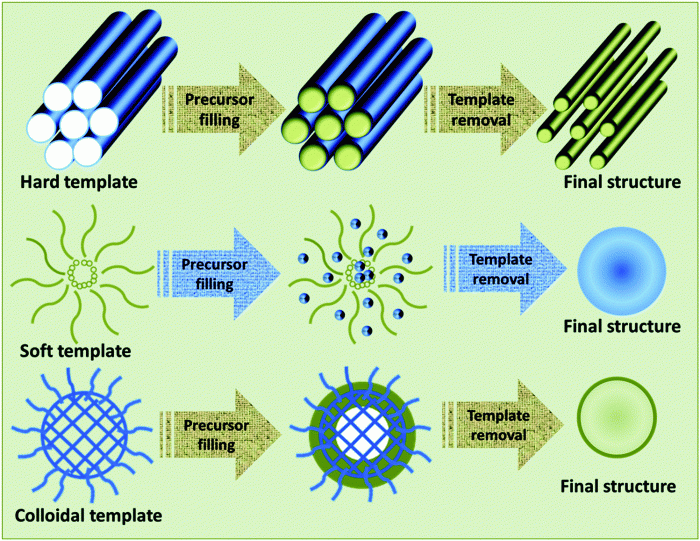
Nanomaterials are transforming the landscape of natural and physical sciences by providing innovative solutions that enhance device performance and contribute significantly to environmental advancements. Their small size and large surface area enable unique properties that are exploited in various applications, from electronics to environmental remediation. This section delves into the critical roles nanomaterials play in these fields.
Role of Nanomaterials in Enhancing the Performance of Physical Devices
Nanomaterials improve the efficiency and functionality of physical devices in several ways. Their unique properties such as electrical conductivity, thermal stability, and mechanical strength allow for the development of advanced materials that surpass traditional counterparts. For example, the incorporation of carbon nanotubes in composite materials results in lighter and stronger products which are ideal for aerospace applications. Additionally, nanomaterials can be engineered to exhibit specific optical properties, making them valuable in the production of high-performance sensors and photovoltaic cells.
This tailoring of properties is crucial in optimizing device performance, leading to enhanced functionality and energy efficiency.
Contributions of Nanomaterials to Advancements in Environmental Science
Nanomaterials are pivotal in addressing environmental challenges through their application in pollution control, waste management, and sustainable energy solutions. Their high reactivity and large surface area enable them to effectively capture and degrade pollutants. For instance, nanoparticles can be utilized to filter heavy metals from water, making it safe for consumption. Similarly, nanomaterials are employed in catalysis for the breakdown of toxic compounds, thereby reducing environmental hazards.Their capacity to enhance the efficiency of solar cells contributes to renewable energy production, thus aiding in the transition to greener technologies.
The development of nanostructured materials for batteries also leads to improved energy storage solutions, facilitating advancements in electric vehicles and energy conservation systems.
Environmental Impact Comparison of Traditional Materials and Nanomaterials
Understanding the environmental impact of materials is essential in promoting sustainable practices. Below is a comparison table that highlights the environmental effects of traditional materials versus nanomaterials.
| Criteria | Traditional Materials | Nanomaterials |
|---|---|---|
| Resource Consumption | Higher resource and energy consumption during production | Lower resource usage due to efficient synthesis methods |
| Waste Generation | Significant waste production and longer degradation times | Potentially lower waste due to improved efficiency and functionality |
| Toxicity | Variable toxicity, often dependent on the chemical nature | Nanoparticles can exhibit unique toxicity; however, their application can mitigate traditional material toxicity |
| Energy Efficiency | Generally lower energy efficiency in application | Higher efficiency, leading to reduced energy consumption in applications |
In conclusion, nanomaterials present a promising avenue for advancements in natural and physical sciences, playing a significant role in enhancing device performance and promoting environmental sustainability through innovative applications.
Educational Approaches to Nanomaterials in Science
Incorporating nanomaterials into educational curricula is essential for fostering a comprehensive understanding of their applications across various scientific domains. By engaging students through interdisciplinary education, we can better prepare the next generation of scientists, technologists, and informed citizens to understand and navigate the complexities of nanotechnology and its societal implications.
Curriculum Module Incorporating Nanomaterials into Computer Science Education
Integrating nanomaterials into computer science education provides a rich ground for innovation and practical learning. A well-structured curriculum module can enhance students’ understanding of how nanomaterials influence computing technologies. Key components of this module might include:
- Fundamentals of Nanotechnology: Introduce the basic principles of nanotechnology and nanomaterials, including their unique properties and potential applications in computing.
- Nanoelectronics: Explore the development of nano-scale electronic devices, such as transistors and memory storage, that could revolutionize the computing landscape.
- Simulation and Modeling: Employ computer simulations to visualize and model the behavior of nanomaterials in electronic applications, reinforcing theoretical knowledge with practical skills.
- Project-Based Learning: Encourage students to develop projects that integrate nanomaterials into computing solutions, promoting creativity and critical thinking.
Importance of Interdisciplinary Education Including Nanomaterials in Social Sciences
The significance of integrating nanomaterials into social sciences cannot be overstated. Understanding the societal impacts of nanotechnology requires insights that span technical knowledge and social context. This interdisciplinary approach emphasizes:
- Ethical Considerations: Discuss the ethical implications of nanotechnology, including privacy concerns and health risks, fostering a well-rounded perspective in students.
- Policy Development: Investigate the role of governance and policy-making in regulating nanomaterials, preparing students to engage in informed public discourse.
- Sociocultural Impact: Analyze how nanotechnology affects societal norms, economic disparity, and global health challenges, highlighting the importance of a holistic education.
Infographic Design Representing the Relationship Between Nanomaterials and Societal Impacts
A well-crafted infographic can visually communicate the intricate relationship between nanomaterials and their societal impacts, making complex information accessible and engaging. Key elements of the infographic should include:
- Visual Representation of Nanomaterials: Illustrate various types of nanomaterials (e.g., carbon nanotubes, nanoparticles) with brief descriptions of their properties and uses.
- Applications in Society: Showcase diverse applications such as medical technology, renewable energy solutions, and environmental conservation, highlighting their benefits.
- Challenges and Concerns: Present potential risks and societal concerns, such as health risks and environmental effects, balanced against the benefits of nanotechnology.
- Future Directions: Include predictions for future developments in nanotechnology and its potential societal implications, encouraging forward-thinking perspectives.
“Nanotechnology holds the promise of transforming industries and improving quality of life, but it is imperative to consider the ethical and societal dimensions as we advance.”
Wrap-Up
In conclusion, the exploration of nanomaterials in physics reveals their incredible versatility and promise for the future. Their unique properties not only distinguish them from bulk materials but also open doors to groundbreaking applications in medicine, electronics, and environmental science. As we continue to innovate and integrate nanomaterials into various fields, we stand on the brink of a scientific revolution that could redefine our understanding and interaction with the material world.
FAQ Guide
What are nanomaterials?
Nanomaterials are materials with structural components at the nanoscale, typically ranging from 1 to 100 nanometers, exhibiting unique physical and chemical properties.
How are nanomaterials used in medicine?
They are used in drug delivery systems, imaging techniques, and targeted therapies, allowing for more effective treatments with fewer side effects.
What makes nanomaterials environmentally friendly?
Nanomaterials can reduce waste and increase efficiency in various processes, potentially leading to a lower environmental impact compared to traditional materials.
Can nanomaterials be harmful to health?
While many nanomaterials are safe, some may pose health risks; ongoing research is essential to fully understand their impact on human health and the environment.
How do nanomaterials enhance electronic devices?
They improve the performance of electronic components by enabling smaller, faster, and more efficient devices, significantly advancing technology.


